
Fencing Built for Working Land
Agricultural Fencing in Bettendorf for farms, acreages, livestock containment, and rural property boundaries
Rural properties demand fencing that handles livestock pressure, equipment contact, and seasonal ground movement without constant repair cycles. Straightforward pricing and dependable scheduling from Putt's Outdoor Services address the logistical challenges farms and acreages face when coordinating installation around planting seasons, weather windows, and animal management routines. Agricultural fencing installations across rural communities surrounding the Quad Cities use durable materials selected for containment strength rather than decorative appeal, with post spacing and wire tension calibrated for cattle, horses, or general land division needs.
Agricultural installations involve woven wire, barbed wire, or board fencing depending on whether livestock size and temperament require flexibility or rigid barriers, and post materials range from treated wood to steel T-posts based on soil conditions and expected impact frequency. Honest recommendations guide material selection so you avoid over-building for hobby properties or under-building for active livestock operations.
Request an on-site evaluation to review acreage layout and discuss fencing requirements based on current or planned livestock use.
What Proper Installation Requires
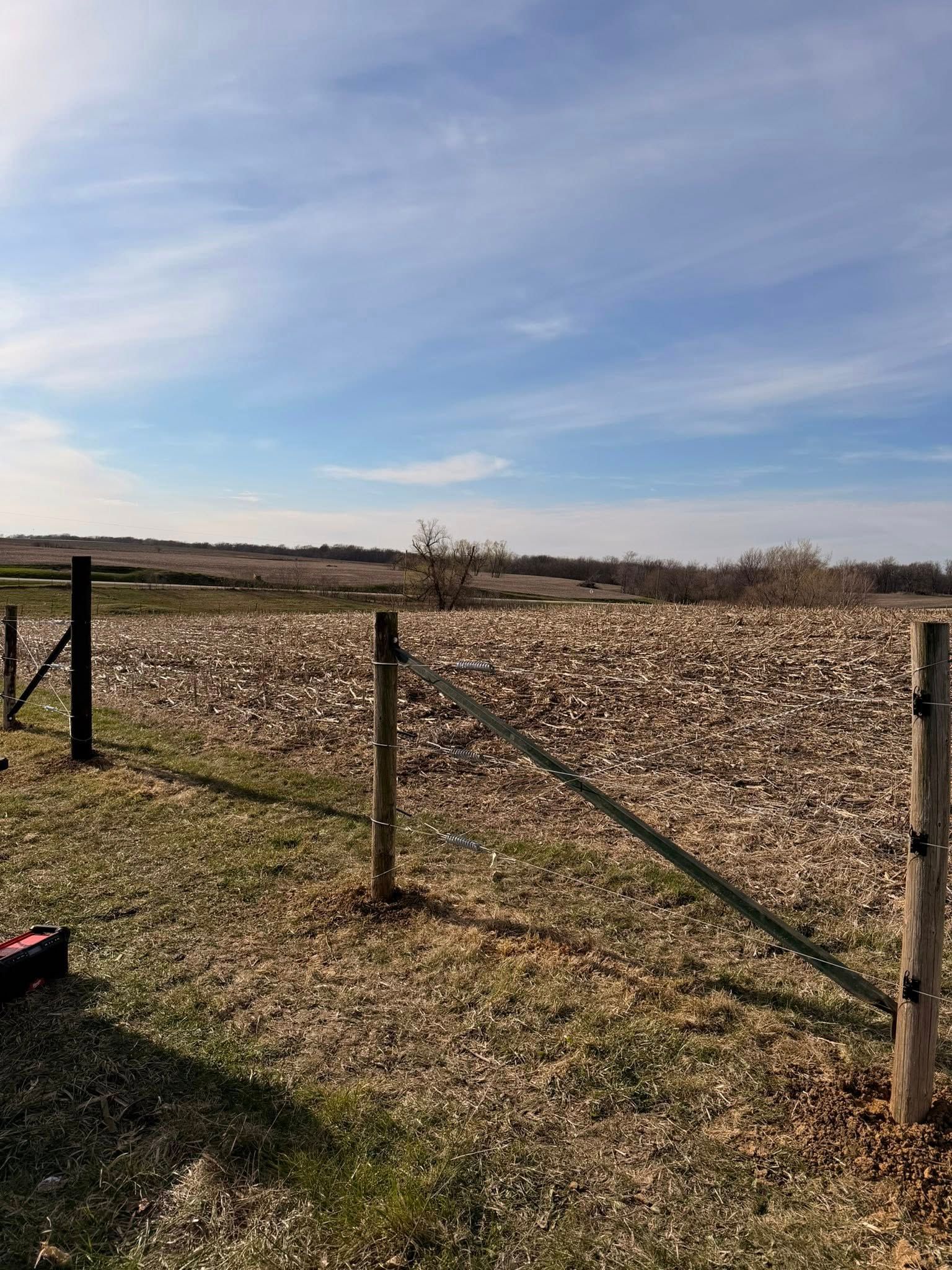
Reliable installation methods for agricultural fencing start with corner brace assemblies that anchor tension across long fence runs, preventing sagging that allows animals to push through or crawl under bottom wires. Posts are set deeper than residential fencing—often forty-eight inches or more—to handle the constant lateral pressure livestock apply when rubbing, leaning, or testing boundaries. Wire tensioning uses come-alongs or mechanical stretchers to eliminate slack that accelerates wear and reduces containment effectiveness.
Once the fence is functional, you notice livestock remain within designated pasture areas, equipment storage zones gain defined access points that reduce confusion during busy seasons, and property boundaries become clear enough to prevent disputes with neighboring landowners. Improved land organization also simplifies rotational grazing plans and creates manageable sections for maintenance tasks like mowing or fertilizing.
Agricultural fencing projects include post installation, wire or board attachment, and gate hardware mounting for access points, but they do not include brush clearing along fence lines or removal of old fencing materials unless specified during the estimate. Soil conditions throughout your property may require adjustments to post depth or spacing that get addressed during the site visit.
Questions Farm Owners Ask
Agricultural fencing decisions depend on livestock type, property terrain, and long-term land use plans that affect material and design choices.
What fencing type works best for cattle compared to horses?
Cattle typically require fewer strands of barbed or high-tensile wire because their size and behavior respond to visible barriers, while horses need board fencing or tightly spaced woven wire to prevent leg injuries and discourage leaning that damages wire fences.
How does Iowa's clay soil affect post stability for agricultural fencing?
Clay holds posts firmly once set but expands and contracts with moisture changes, which is why setting posts below the frost line and using gravel backfill around the base prevents heaving during freeze-thaw cycles common in this region.
Why do some agricultural fences lose tension within the first year?
Insufficient corner bracing or inadequate initial wire tensioning allows slack to develop as posts settle and wire stretches under load, which is why corner assemblies and proper tensioning tools matter more than wire gauge alone.
When should I replace old agricultural fencing instead of repairing sections?
If more than thirty percent of posts show rot at ground level or wire exhibits rust that reduces diameter noticeably, replacement typically costs less long-term than repeated repairs that only delay failure of adjacent sections.
What gate width do I need for equipment access on farm properties?
Twelve-foot gates accommodate most tractors and hay equipment comfortably, while sixteen-foot openings work better if you regularly move wide implements or need clearance for multiple vehicles passing simultaneously.
Putt's Outdoor Services delivers agricultural fencing solutions tailored to your livestock type, acreage size, and land management goals. Reach out for an estimate that addresses your farm's specific containment and property security needs throughout the Quad Cities area.